PART II — THE KITAMAEBUNE
2.4
The Finance
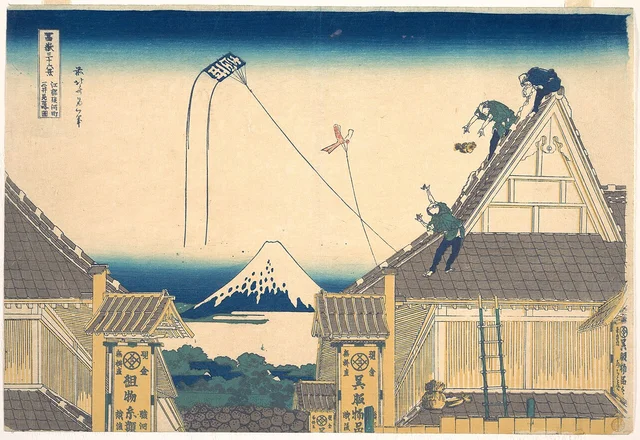
Katsushika Hokusai, Mitsui Shop at Surugacho in Edo. From the series Thirty-six Views of Mount Fuji, c. 1830–32. Colour woodblock print. The Mitsui flagship store — owned by a house of merchants, not a ship owner. The ledger counted more than the vessel. Public domain.
With the hardware complete, the merchants began operating the ships as extreme financial instruments. The wealthiest never boarded a vessel themselves. They entrusted operations to a sendō — a captain-CEO.
The Prototype of Venture Capital
The merchant acted as an investor, managing a portfolio of ships from shore. The boatman acted as an entrepreneur, making real-time decisions at sea. The role division is almost identical to a modern VC model.
The Story of Zeniya Gohei
Seventy years of winning. Born 1773, a merchant of Kaga. From one ship to over two hundred. Branch offices in multiple ports. Banking. Unofficial trade. Late in life, arrested on political suspicion. Died in prison.
One season can make a fortune. One mistake can erase it.
That is the structure KITAMAE replicates as a game.
What KITAMAE Replicates
The player in KITAMAE is placed in the same decision structure as Zeniya. Capital allocation, trust in a boatman, reading weather data, and the possibility of losing everything to a single storm. This is not a tourism simulator or a fantasy RPG. It is a reconstruction of a real merchant financial system.