PART I — SETTING
1.4
The Hidden Hierarchy
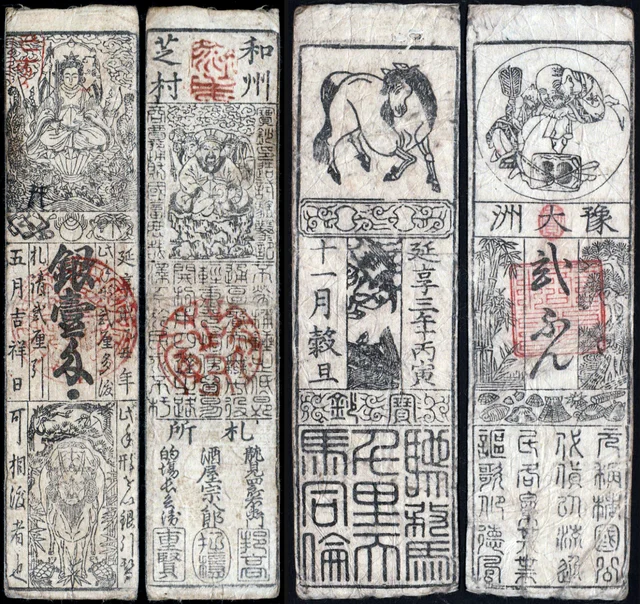
Various types of hansatsu (domain scrip) issued by feudal domains during the Edo period, c. 1600s–1860s. Woodblock-printed on washi paper. Wikimedia Commons. Public domain.
The merchants who controlled the nation's logistics and built enormous fortunes were, under the Tokugawa shogunate's official class system — shi-nō-kō-shō — ranked at the very bottom of the social hierarchy.


The official hierarchy. Merchants ranked at the bottom.
The Real Order
Every major river meant hiring porters to carry your goods on their shoulders. Heavy rain triggered kawadome — a river blockade that could strand travellers for days. Japan's interior was deliberately designed to prevent the movement of bulk cargo.


In practice, the hierarchy was inverted. Samurai owed; merchants owned.
Where the Culture Came From
Most of what the world recognises today as 'classical Japanese culture' did not emerge from the warrior class. It emerged from this wealthy merchant society. Ukiyo-e. Kabuki. Haiku. Sushi. Tempura. Soba. All of it — the urban culture of the merchant class. The player in KITAMAE begins from this same class. Starting at the nominal bottom, rising through the sea to an influence that surpasses even the samurai. In the next chapter, we finally board the ship.