PART III — THE PRESENT
3.3
What We Are Still Counting
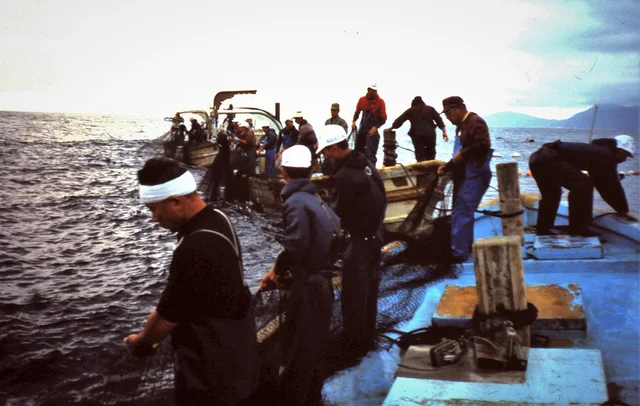
Kono, Fukui Prefecture. The cooperative still pulls the nets. For now.
Photo: Gpwitteveen CC BY-SA 4.0 / Wikimedia Commons.Preservation by neglect has an expiry date. The numbers already existed. Population figures in census reports. Brewery licences in tax databases. Practitioner registrations in prefectural records. No one had read them together — through the specific question of what is happening to these places.
No one was counting.
Reading the Numbers Sideways
The Ministry of Internal Affairs publishes population data for every municipality in Japan. The National Tax Agency records every sake brewery that opens and closes. The Agency for Cultural Affairs maintains registers of traditional craft practitioners. The data was there. What did not exist was a single document that read these figures together — and asked what they meant for the places that the kitamaebune once built.
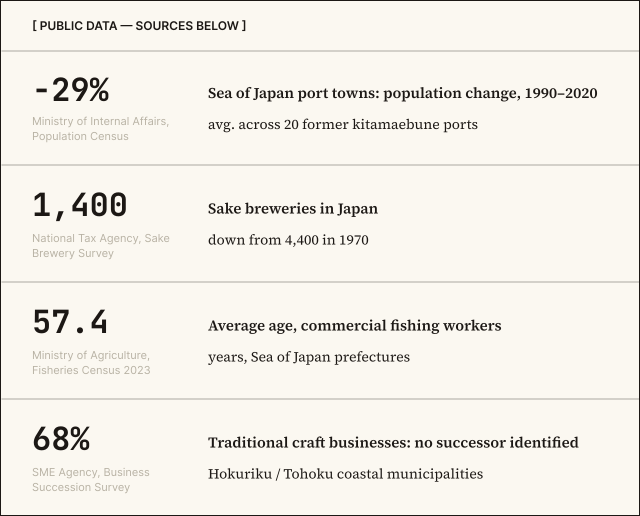
Sources are public records. Numbers are verified at time of writing. For current figures, follow the links below
Last updated: Aug 2025
What the Numbers Cannot Say
Population statistics count people, not what they carry. A closed brewery is recorded. What is not recorded: whether anyone learned the brewing method before the doors shut. Whether the family kept the records. Whether the knowledge crossed to the next town or simply ended. The gap between what is counted and what is lost is where this story becomes impossible to finish.
END OF CHAPTER 3.3
PART III COMPLETE
You read 13 chapters across three parts. That took about three hours of your time. We thank you for it.
Continue to The Observatory →