DISPATCH №002 · Fushiki & Takaoka
Wealth was shipped in, the city was left behind, and a palate took root.
Fushiki & Takaoka, Toyama / PUBLISHED 2026.08
© Toyama Tourism Organization
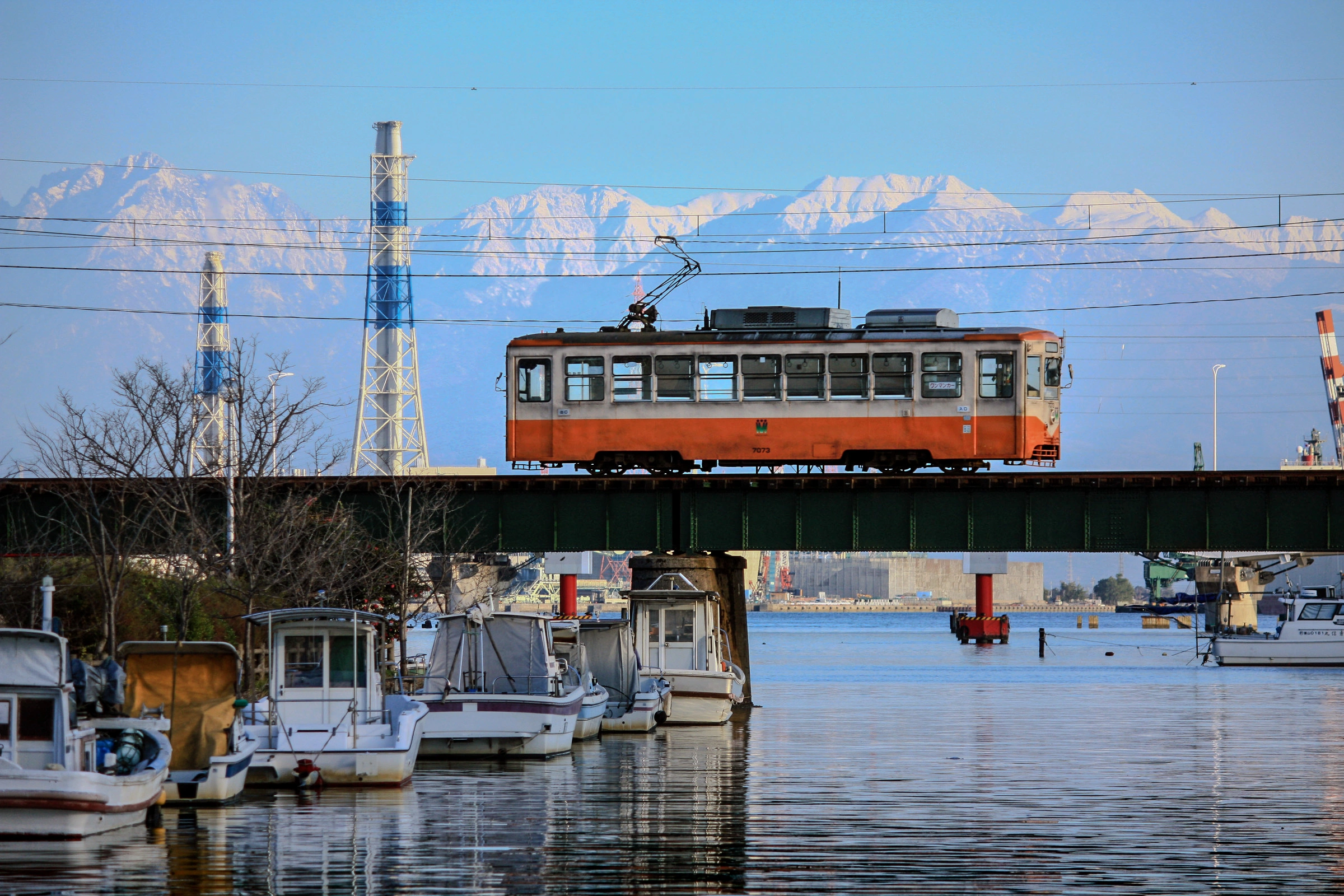
Fushiki is a port town positioned at the mouth of the Oyabe River. Direct your gaze at the present landscape, and the first things to register are the heavy infrastructure of an industrial port and a vast expanse of water. Yet, beneath this topography of concrete and steel, the memories of logistics dating back to the Edo period lie stratified.
This was once a crucial hub for the Kitamaebune—the northern ships that circulated the wealth of the Japan Sea. The capital that crossed the sea left buildings in its wake, while the kelp (konbu) carried by the ships penetrated the city of Takaoka, where it continues to function today as a distinct culinary culture. This is a dispatch recording how logistics engineered both the hardware and the software of a town.
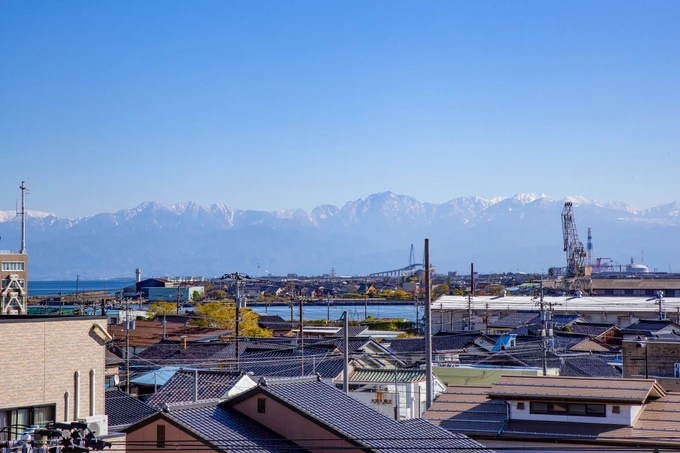
The Former Akimoto Residence, a Kitamae-bune Merchant's Lookout Over Fushiki Port
© Toyama Tourism Organization
The port of 伏木 / Fushiki was not born of accidental geography; it was an intentionally constructed gateway from ancient times. Situated at the mouth of the 小矢部川 / Oyabe River, this location had functioned as a vital node connecting the Japan Sea with the mountainous inland long before the early modern period. Unlike Higashi-Iwase, which was carved out by a sudden flood, the calm waters of Fushiki had served as a stable, permanent base for regional maritime traffic since the era of ancient provincial capitals.
Recognizing these strategic geographic conditions, the lords of the 加賀藩 / Kaga domain constructed massive rice storehouses (御蔵 / okura) here. Fushiki was designated as the primary export port for the western half of the domain. Millions of bales of tax rice collected from the inland plains were stacked in Fushiki's storehouses, ready to be loaded onto ships bound for Osaka. This institutional backing solidified Fushiki's role as a colossal logistics hub.
The 北前船 / Kitamaebune network brought immense wealth to Fushiki, but the true economic engine of this port lay in "transshipment." The massive Kitamaebune, built for open-ocean voyages, could not navigate the shallow inland rivers. Therefore, Fushiki functioned as an essential "hub and spoke" terminal. Deep-draft vessels dropped anchor, and their cargo was transferred to shallow-draft riverboats known as 高瀬舟 / takasebune. These smaller vessels then carried the freight upstream to the thriving inland commercial city of 高岡 / Takaoka.
The cargo that came to symbolize this route was not fertilizer, but kelp (昆布 / konbu) from Hokkaido. If Fushiki was the receiving yard, Takaoka was the factory. The merchants of Takaoka purchased kelp in massive quantities—not merely to consume it, but to process and distribute it. They built a highly sophisticated supply chain that transformed raw northern kelp into high-value-added commodities. It was this deeply systematized integration between the port and the inland city that firmly established Toyama's unrivaled status as Japan's premier center for kelp consumption.
At its peak, Fushiki was dominated by powerful shipping agents. The riverbanks were heavily fortified, lined seamlessly with warehouses and the sprawling estates of merchant houses. The town functioned as a continuous logistics machine, its architecture specifically designed for the rapid movement, appraisal, and storage of goods. An unbroken corridor of commerce extended from the docks of Fushiki, down the Oyabe River, and into the heart of Takaoka.
The golden age of maritime shipping inevitably gave way to modernization. When the railways opened in the late 19th century, national freight routes were reconfigured, and the primary mode of transport shifted from water to steel rails. Fushiki, however, did not fall into decline. It continued to expand into a designated modern international port, ultimately evolving by integrating into the broader "Fushiki-Toyama Port" system. Today, historical shipping agencies stand as museums, and the physical traces of the old riverboat transshipment network remain intact. The infrastructure built for the Kitamaebune was simply waiting to be repurposed for the industrial age.
Set sail for Fushiki & Takaoka →Even as the primary function of the port has completely shifted to modern heavy industry, the physical evidence of the former wide-area logistics system remains firmly on the ground. Three perspectives exist along the route from the river mouth inland, serving as traces of a system in operation.
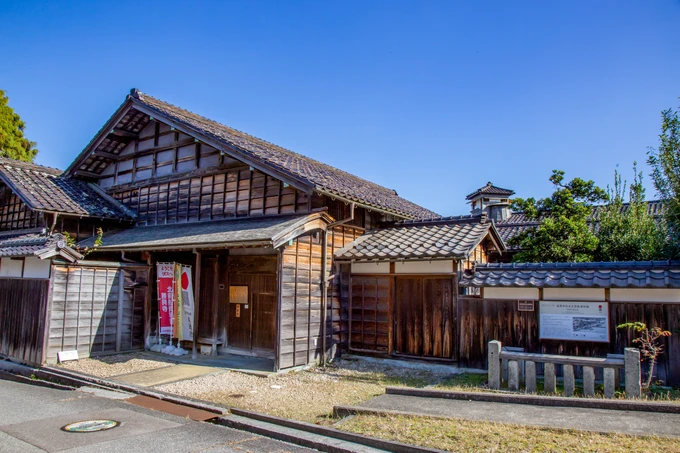
Evidence 1 — 旧秋元家住宅 / Former Akimoto Residence · The merchant estate with a rooftop watchtower
© Toyama Tourism Organization
Atop the roof of the 旧秋元家住宅 / Former Akimoto Residence (now the Takaoka City Fushiki Kitamaebune Museum), which stands on a hill overlooking Fushiki Port, protrudes a watchtower known as a 望楼 / bōrō. This is no decorative observatory. In an era devoid of modern communication technology, it served as a highly practical physical interface for monitoring maritime traffic, observing weather conditions, and directly assessing maritime risks. Shipowners gathered real-time data from this tower to manage the operations of their vessels, into which immense capital had been invested. This vertical architectural extension proves that the merchants of Fushiki were not mere distributors, but system operators overseeing a vast network. Its vantage point of surveillance remains fixed in the sky today.
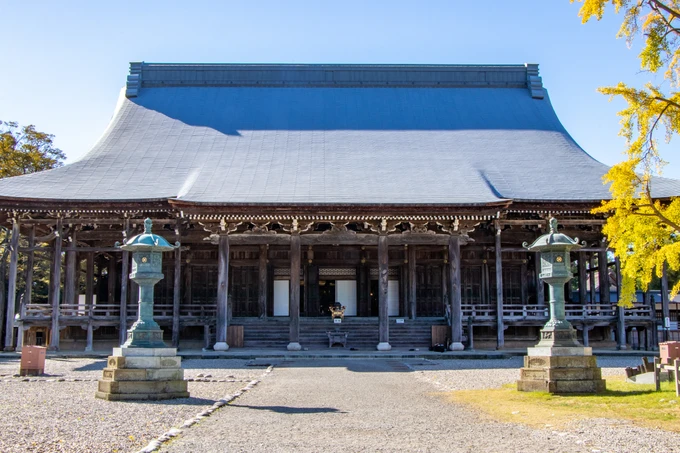
Evidence 2 — 勝興寺 本堂 / Shokoji Temple Main Hall · The architecture of maritime capital
© Toyama Tourism Organization
Situated in the center of the Fushiki area is 勝興寺 / Shokoji Temple, a massive stronghold of Jodo Shinshu Buddhism. Designated a National Treasure, this religious facility functions not only as a place of worship but also as material evidence of the overwhelming transport capacity of the Kitamaebune network. The colossal architectural components, including the 唐門 / Karamon gate reportedly transported from Kyoto by the Kitamaebune, prove that the maritime system of the time was fully realized as an infrastructure capable of hauling not just daily consumables like rice and kelp, but highly specialized building materials and exceptionally heavy loads over long distances. By converting maritime wealth into highly durable religious hardware, the reality of the vast capital accumulated through shipping is preserved intact into the present.
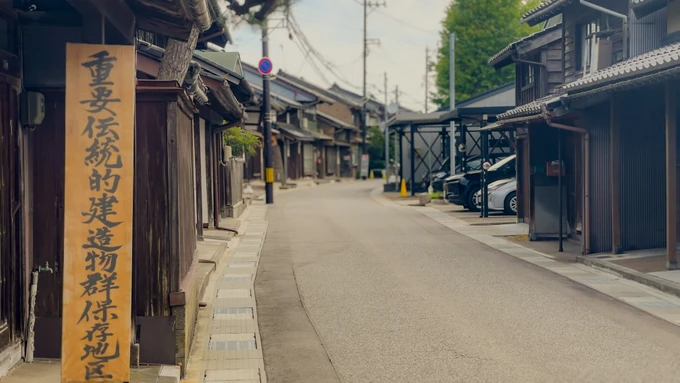
Evidence 3 — 吉久重伝建地区 / Yoshihisa Preservation District · The entrance to the historic river trade route
A short way up the Oyabe River from Fushiki Port lies the 吉久 / Yoshihisa district (an Important Preservation District for Groups of Traditional Buildings). This was the critical node for rice accumulation, home to the 御蔵 / okura where the Kaga domain stored its tax rice. Step inside, and you find a distinct layout of narrow, elongated plots facing the river, lined with continuous earthen-walled machiya (townhouses). These embody a design philosophy meant to seamlessly connect the takasebune riverboats coming from inland with the Kitamaebune heading out to the open ocean. The streetscape of Yoshihisa is not just a row of old houses; it is a continuum of "logistics devices" optimized for the efficient storage and dispatch of standardized goods. The spatial arrangement of the buildings and waterways physically maps the flow of the era's supply chain directly onto the ground.
The contemporary conversion of space and function. Even when the primary function of a port shifts, the buildings themselves do not disappear. The transition into a second life is a quiet, continuous process of updating the purpose without altering the physical form.
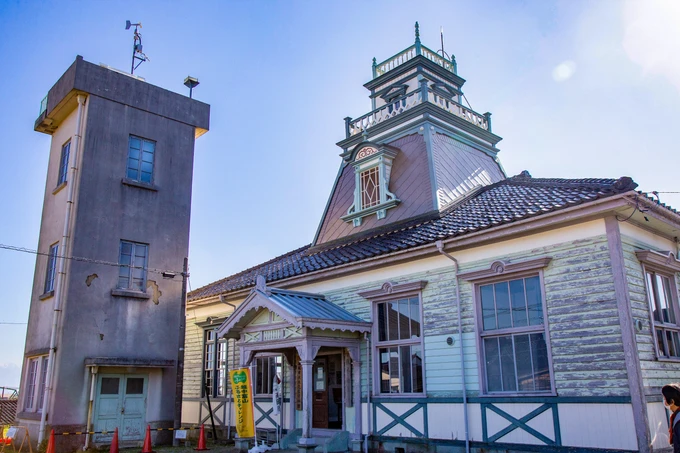
Second Life 1 — 測候所 / Sokkōjo · The reinvestment in safety
© Toyama Tourism Organization
The Takaoka City Fushiki Meteorological Museum (Former Fushiki Weather Station). Nozo Fujii, a shipping merchant who amassed a fortune via the Kitamaebune, invested his private wealth to establish Japan's first private weather station to ensure maritime safety. He reinvested the massive capital gained from the sea not into personal, physical ornamentation, but into the invisible infrastructure of the next era: "safety." This pseudo-Western style building still looks down upon the sea from the hills of Fushiki.
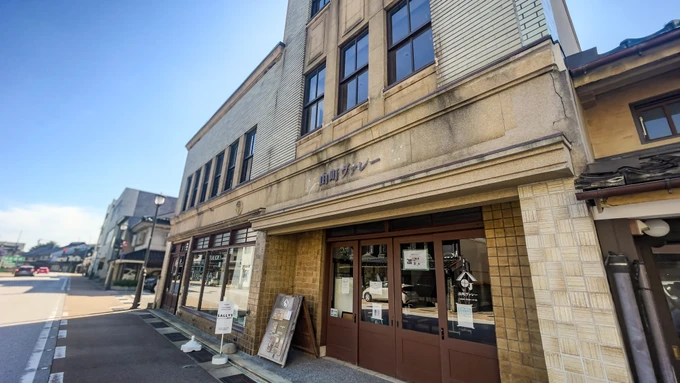
Second Life 2 — 山町ヴァレー / Yamacho Valley · The adaptive reuse of merchant architecture
In the heart of Takaoka, along 山町筋 / Yamacho-suji, stand the earthen-walled machiya of wealthy merchants. The black plaster walls, once coated to extreme thickness to physically defend goods and assets from frequent fires, have now been repurposed into mixed-use commercial facilities like "Yamacho Valley." The robust exterior shell and structural logic remain completely unchanged; only the internal software has been swapped out for modern retail and dining. It is a state in which impregnable hardware, originally designed to guard assets, has updated its function to become a welcoming platform for people.
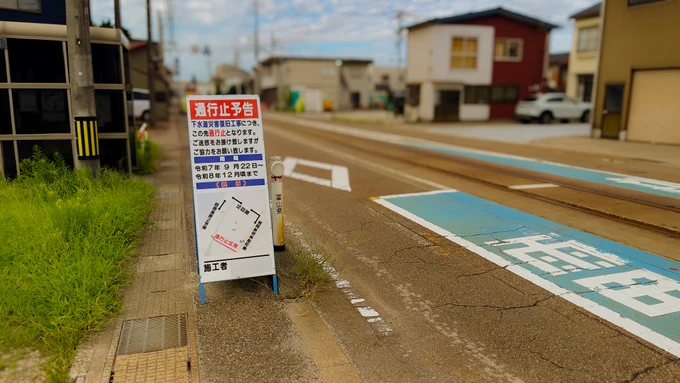
Second Life 3 — 修復という選択 / A Pause to Repair · Post-earthquake infrastructure recovery
The clusters of historic townhouses in old districts like the Yoshihisa Preservation Area are not always operating in a state of perfection. Due to the structural damage caused by the 2024 Noto Peninsula earthquake, some facilities have been forced into long-term closure (downtime) for seismic retrofitting and repair. Yet, this very process of "closure and repair" is a crucial phase in the city's second life. It visualizes the city's decision to accept temporary functional suspension and allocate resources toward physical restoration, ensuring these historic structures are passed on to the next generation as practical infrastructure, rather than mere museum exhibits.
None of this is restoration in the museum sense. The hardware of the shipping era—from weather observatories to earthen warehouses—continues to host new software, proving that an infrastructure built for massive logistics carries the structural weight to endure.
The embedding and evolution of kelp culture.
After confirming the physical traces of heritage like architecture and port infrastructure, we turn our attention to the state of the food culture that continues to breathe in the city today. Three hubs allow you to experience how the Hokkaido kelp landed in Fushiki rooted itself as a distinct culinary culture in Takaoka, generating an ongoing, living ecosystem.
© Toyama Tourism Organization
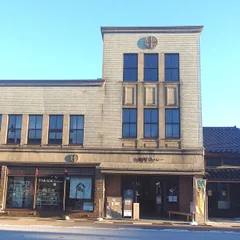
STAY & TASTE 1 — クラフタン / Craftan
Konbujime specialty dining in Yamacho-suji. Reservation recommended.
A specialty restaurant for konbujime (kelp-curing), situated within the earthen-walled spaces of Yamacho-suji. It reconstructs Toyama's unique konbujime as a modern preservation and culinary technique, applying it not only to traditional seafood but to a diverse array of ingredients including meat, vegetables, and tofu. By using irizake (a reduction of umeboshi and sake) as a seasoning interface, it offers a system where one can directly experience the pure amplification of umami brought about by kelp-derived amino acids, without relying heavily on salt.
→ Open in Google Maps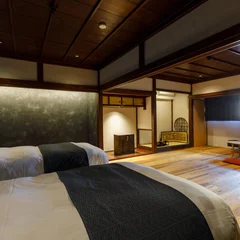
© Toyama Tourism Organization
STAY & TASTE 2 — KOMBUHOUSE
Experiential accommodation & KOMBU BAR in Kanayamachi.
An experiential mixed-use accommodation facility located in Kanayamachi. Designed entirely around the concept of "kelp wellness," it provides a staying infrastructure within a renovated traditional townhouse. The ground-floor "KOMBU BAR" serves full-course meals and original beverages based on kelp dashi, while also housing an aesthetics clinic utilizing Gagome kelp. Furthermore, it operates a regional circular material cycle by supplying used kelp dashi grounds as feed for a sea urchin aquaculture project at Himi High School, expanding its footprint beyond a single facility.
→ Open in Google Maps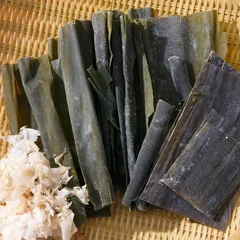
© MUROYA
STAY & TASTE 3 — 室屋 / Muroya
Established kelp processing & sales. Walk-in.
One of the core established shops in the kelp processing and sales network that remains active in Takaoka City today. It maintains an independent supply chain, procuring raw materials from the exact same Hokkaido origins—such as Rausu and Rishiri—as the Kitamaebune once did. It is a place where one can directly verify that Toyama's unique physical processing techniques, such as shiro-tororo (white shredded kelp) and kuro-tororo (black shredded kelp), have seamlessly integrated into the daily lives of citizens, not as historical relics, but as essential modern food infrastructure.
→ Open in Google MapsThe system design of access routes.
The physical process of moving to the destination itself becomes an act of tracing the former wide-area logistics system. An approach via two rail-based infrastructures that thread their way between heavy industrial zones and historical heritage.
Access — JR氷見線 / JR Himi Line
An approximately 15-minute railway journey from Takaoka Station to Fushiki Station. From the train window, you can witness the waters where wooden sailing ships once anchored, now completely transformed into a modern heavy industrial port lined with colossal cranes and silos. It is a linear approach route that traverses a massive contemporary logistics hub (hardware) to trace back to the legacy of past maritime infrastructure.
Access — 万葉線 / Manyosen
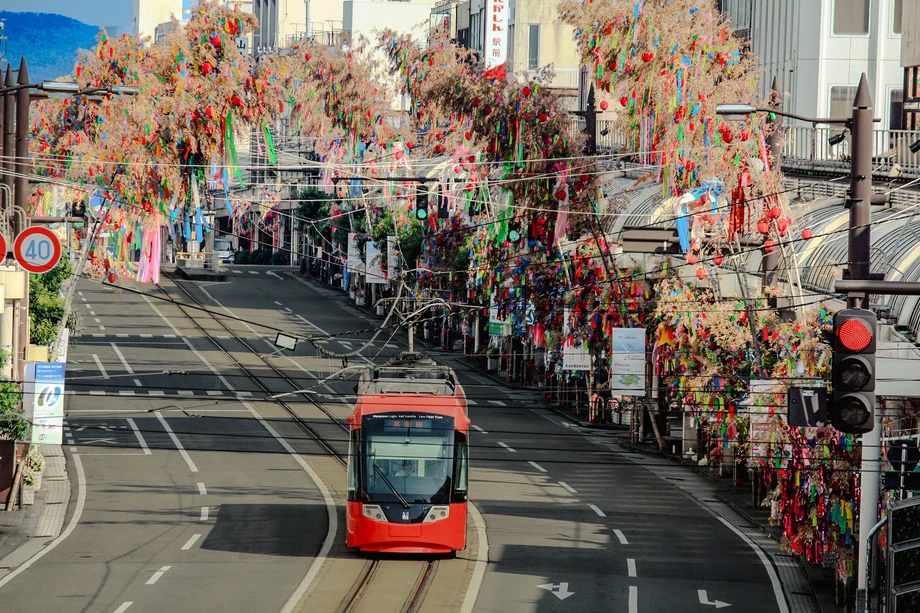
A tram network originating from Takaoka Station that seamlessly connects "consumption and experience infrastructure" areas like Yamacho-suji and Kanayamachi to the "accumulation infrastructure" of Yoshihisa. It functions as a route that allows passengers to re-experience the Oyabe River water transport network—which once connected the inland (Takaoka) to the port (Fushiki) via takasebune—as a modern, land-based transit system.
Model course
Begin at Fushiki Station. First, ascend the watchtowers of the Former Akimoto Residence and the Meteorological Museum to survey the geographical structure of the entire port from an elevated vantage point. After confirming the physical transport scale of the maritime network at the Karamon gate of Shokoji Temple, move to the Yoshihisa area along the Manyosen line. Walk through the riverside machiya to observe the spatial arrangement of the rice accumulation system (the former okura sites). Finally, head into downtown Takaoka to experience a konbujime set meal at Craftan, concluding at KOMBUHOUSE.
© Toyama Tourism Organization
Former Akimoto Residence & Meteorological Museum — ascend the watchtowers to survey the port structure from above.
National Treasure Shokoji Temple — witness the Karamon gate transported by Kitamaebune heavy shipping.
Yoshihisa Preservation District — trace the narrow machiya and water channels once tied to takasebune rice transport.
Yamacho-suji & Yamacho Valley — observe the thick black plaster dozō converted to modern commerce.
Craftan & KOMBUHOUSE — experience contemporary konbujime gastronomy and stay within the living kelp ecosystem.
Logistics
JR Himi Line from Takaoka Station (~15 min to Fushiki Station). Manyosen tram operates frequently through Takaoka city center, Yoshihisa, and Shinminato. Bicycle rentals and walking routes connect the riverside historical preservation zones.